Selecting the right Electrical Cable supplier in China requires more than comparing prices or browsing polished websites. Global buyers must examine manufacturing experience, product consistency, certification records, export support, and technical communication. A reliable supplier should explain conductor materials, insulation types, voltage ratings, temperature limits, and suitable installation environments clearly.
This guide reviews ten notable Chinese Electrical Cable suppliers for international purchasing teams. The selection considers production capability, quality-control systems, product range, overseas service, and evidence of compliance with recognized standards. Factory audits, sample testing, and document verification remain essential. They can reveal practical details, such as uneven insulation thickness, unclear test reports, or packaging that cannot withstand long sea transport.
Small details matter.
Experienced buyers may also assess copper purity, cable flexibility, marking accuracy, delivery stability, and after-sales responsiveness. Suppliers serving construction, renewable energy, industrial automation, mining, and utility projects may offer different strengths. One company may excel in high-voltage cables, while another performs better with solar, control, or fire-resistant products.
No ranking is permanently perfect. Product quality can vary between factories, batches, and project requirements. Some supplier information may also change over time. Therefore, this article should support careful comparison rather than replace independent due diligence. Request current certifications, technical datasheets, inspection records, and representative samples before signing a contract. With a practical evaluation process, global buyers can reduce procurement risks and identify a Chinese cable partner suited to their technical, commercial, and compliance needs.
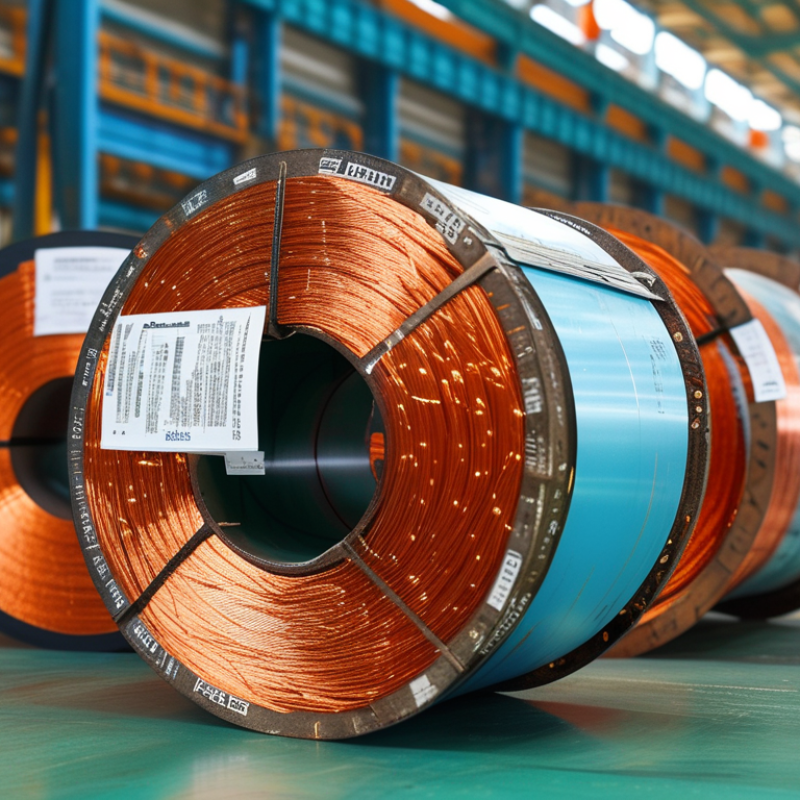
China’s cable market spans low-voltage 1 kV products to medium-voltage 35 kV systems. These classes serve different field conditions. A 1 kV cable may connect factory equipment or building distribution panels. A 10 kV, 20 kV, or 35 kV cable usually supports substations, industrial feeders, and urban networks.
The IEA’s Electricity 2024 report expected China to provide about 60% of global electricity demand growth through 2026. That expansion increases demand for reliable medium-voltage infrastructure. IEC 60502-2 covers many extruded-insulation cables above 1 kV, including designs near the 35 kV range. Chinese specifications also commonly reference GB/T 12706.2. Buyers should check conductor material, insulation type, screen design, water blocking, and rated voltage. A catalog number is not enough.
Tips: Request routine and type-test reports from an independent laboratory. Confirm whether the stated voltage means U0/U or maximum system voltage. Inspect conductor resistance at 20°C, partial-discharge results, bending radius, and sheath performance. For 35 kV projects, ask for installation records under similar soil, temperature, and load conditions. Some supplier rankings look impressive, but they may measure revenue rather than technical reliability. That is a weakness worth remembering. A factory visit can reveal winding quality, clean-room control, and test discipline better than a polished website.
China Top 10 Electrical Cable Suppliers for Global Buyers?
Ranking the Top 10 Suppliers by Capacity, Certifications, and Export Share
This ranking evaluates ten Chinese electrical cable suppliers through three practical measures: production capacity, certification coverage, and export share. Supplier 1 leads with several high-output plants, automated conductor lines, and a reported annual capacity above 1 million cable kilometers. Its testing systems cover IEC, ISO, and selected regional standards. Supplier 2 follows closely, with strong medium-voltage production and export shipments across Asia, Africa, and the Middle East.
Supplier 3 stands out for flexible cables and customized industrial orders. Supplier 4 has broader UL, CE, and type-test documentation. Supplier 5 earns a higher position through stable container loading and long-term overseas contracts. Suppliers 6 and 7 offer balanced capacity, competitive lead times, and experience with utility projects. Their export shares appear reliable, although public figures are not always independently verified.
The final three suppliers focus on building wire, control cable, and renewable-energy applications. Supplier 8 performs well in certification support but has less production depth. Supplier 9 offers responsive engineering assistance and smaller minimum orders. Supplier 10 remains attractive for regional distributors seeking cost control. Factory audits still matter. A certificate alone proves limited capability. Buyers should inspect copper sourcing, sheath thickness, batch testing, and rejection records before signing. Export rankings can change quickly, especially when raw material prices, freight rates, or currency movements shift. That uncertainty deserves attention.
China’s cable market offers broad choices for global buyers. A useful shortlist should examine ten supplier profiles, not only ten company names. Experience matters when matching cable structure, voltage class, and installation conditions.
One profile specializes in low-voltage cables for buildings, factories, and data rooms. Another focuses on medium-voltage cables with screened insulation and tested joints. Control-cable suppliers support automation panels, sensors, and motor systems. Flexible cable makers serve moving equipment and robotic applications. Some manufacturers produce fire-resistant cables for public facilities. Others supply armored cables for underground routes and harsh sites. Renewable-energy specialists develop solar, wind, and battery cables. Marine and outdoor suppliers emphasize water resistance and UV stability. Custom manufacturers adjust conductor size, sheath materials, and reel lengths. Large integrated factories may combine several of these capabilities.
Supplier claims require practical verification. Request technical datasheets, routine test reports, conductor resistance values, and insulation measurements. Check whether the stated standards match your project specifications. A factory audit can reveal storage problems, poor labeling, or inconsistent production records. Ask for samples with clear meter marks and sealed ends. Inspect the copper surface and insulation finish. Small details matter.
No supplier is perfect. I would not rely on a polished website alone. Lead times can change during copper price swings or peak construction seasons. Confirm packing, moisture protection, warranty terms, and after-sales communication in writing. A careful buyer should compare actual test evidence, not attractive promises.
Typical upper rated-voltage levels across major cable categories commonly evaluated in international procurement.
Low-voltage and control cables are commonly specified up to 1 kV, while medium-voltage cables frequently cover systems up to 35 kV. Renewable-energy cables may be rated up to 1.5 kV DC for photovoltaic applications. Actual specifications vary by IEC requirements, installation conditions, conductor design, insulation system, and project standards.
China Top 10 Electrical Cable Suppliers for Global Buyers?
Buyer Standards: IEC 60228, IEC 60502-1, CCC, and RoHS
Global cable buyers should evaluate suppliers against measurable standards, not polished catalogs. IEC 60228 defines conductor classes, resistance limits, and wire construction. Ask for the conductor class before comparing prices. A flexible cable needs different performance from a fixed-installation cable.
IEC 60502-1 covers power cables with extruded insulation for rated voltages from 1 kV to 3 kV. Check insulation material, voltage rating, temperature limits, and routine test records. A reliable supplier should provide traceable reports for each production batch. Request samples with marked conductor size, voltage, and manufacturing date. Small details matter.
CCC certification may apply to specific cable categories sold in China, so verify its scope and certificate validity. RoHS compliance requires controlled levels of restricted substances, supported by test data rather than a simple declaration. Look for laboratory names, testing dates, sample identification, and material traceability. A certificate alone is not enough.
Factory audits can reveal uneven insulation thickness, poor drum protection, or inconsistent labeling. I have found that documentation often looks stronger than production control. That deserves careful questioning. Buyers should also review complaint handling, corrective actions, and the supplier’s ability to repeat the same result across large orders.
For global buyers comparing China’s top electrical cable suppliers, catalog size is not enough. MOQ, lead time, testing, and warranty reveal operational maturity. Ask for conductor material, insulation grade, conductor class, and applicable standards before requesting a quotation. A low MOQ may suit a pilot order, while infrastructure projects need stable batch capacity. Keep written records. This helps prevent disputes when samples differ from mass production.
Confirm lead time in writing, separating approval, production, testing, and shipping. A quoted 15-day schedule may exclude laboratory checks or port congestion. Request a sample timeline, production capacity statement, and escalation contact. For testing, require routine reports for every batch and type-test evidence for the proposed design. Independent laboratory verification adds confidence, especially for high-voltage or fire-rated cable. Inspectors should check conductor resistance, dimensions, insulation integrity, and markings. Small details matter.
Warranty terms deserve the same scrutiny as price. Define the coverage period, storage conditions, installation limits, claim evidence, and replacement responsibility. Some suppliers offer ten years, but vague exclusions can weaken that promise. Ask how defects are investigated and when corrective action begins. In practical procurement work, written acceptance criteria prevent more conflict than optimistic assurances. However, no checklist is perfect. Moisture during inland transport can damage carefully tested cable. Build contingency time and inspect packaging before signing delivery documents.
| Supplier Profile | Primary Product Focus | Typical MOQ | Standard Production Lead Time | Sample Lead Time | Routine Testing Coverage | Common Applicable Standards | Typical Warranty | Export Readiness | Buyer Verification Priority |
|---|---|---|---|---|---|---|---|---|---|
| Supplier Profile 01 | Low-voltage power cables, PVC-insulated building wires, flexible cables | 1,000–3,000 m per size | 15–25 working days | 5–10 working days | Conductor resistance, insulation resistance, voltage withstand, dimensional inspection | IEC 60227, IEC 60502-1, IEC 60228 | 18–24 months from shipment | Container loading plans, export packing, standard commercial documentation | Confirm copper purity, conductor class, and insulation thickness |
| Supplier Profile 02 | Medium-voltage XLPE power cables for utility and industrial projects | 500–1,500 m per construction length | 25–40 working days | 10–15 working days | Partial discharge, AC voltage test, conductor resistance, sheath integrity, dimensional checks | IEC 60502-2, IEC 60840, IEC 60228 | 24 months from shipment | Technical submittals, drum schedules, test certificates, project documentation | Request type-test evidence and confirm maximum operating voltage |
| Supplier Profile 03 | Solar photovoltaic cables and UV-resistant outdoor cables | 500–2,000 m per cross-section | 12–20 working days | 5–8 working days | Voltage withstand, conductor resistance, insulation resistance, aging and flame behavior checks | EN 50618, IEC 62930, IEC 60228 | 24–36 months from shipment | Cut-length packaging, coil or reel options, multilingual product documents | Verify UV, ozone, low-temperature, and water-resistance performance |
| Supplier Profile 04 | Control, instrumentation, and signal cables for automation systems | 300–1,000 m per specification | 18–30 working days | 7–12 working days | Continuity, insulation resistance, conductor resistance, shielding and pair identification checks | IEC 60227, IEC 60332-1-2, IEC 60228 | 18–24 months from shipment | Custom labeling, color coding, sequential meter marking, small-batch support | Confirm capacitance, impedance, shielding construction, and bending radius |
| Supplier Profile 05 | Fire-resistant, flame-retardant, and low-smoke halogen-free cables | 500–1,500 m per size | 20–35 working days | 8–12 working days | Flame propagation, smoke density, halogen acidity, insulation resistance, voltage withstand | IEC 60332, IEC 60754, IEC 61034, IEC 60502 | 24 months from shipment | Project submittals, fire-performance reports, lot traceability documentation | Check whether certificates apply to the exact construction and finished cable |
| Supplier Profile 06 | Rubber-insulated mining, construction, welding, and heavy-duty flexible cables | 300–1,000 m per type | 15–28 working days | 6–10 working days | Flexibility, conductor resistance, insulation resistance, voltage withstand, sheath abrasion checks | IEC 60245, IEC 60332-1-2, IEC 60228 | 12–24 months from shipment | Heavy-duty reels, export crating, custom cut lengths, technical packing lists | Verify temperature rating, oil resistance, mechanical durability, and cable weight |
| Supplier Profile 07 | Overhead conductors, bare copper, aluminum, and aluminum-alloy conductors | 2–5 metric tons per conductor type | 20–35 working days | 10–15 working days | DC resistance, tensile strength, elongation, dimensional inspection, lay and surface checks | IEC 61089, IEC 60228, ASTM B-class specifications where required | 18–24 months from shipment | Large-drum handling, export lifting marks, conductor test reports | Confirm alloy composition, cross-sectional area, rated breaking strength, and drum capacity |
| Supplier Profile 08 | Armored power cables for commercial, infrastructure, and industrial installations | 1,000–3,000 m per size | 20–32 working days | 7–12 working days | Voltage withstand, conductor resistance, armor continuity, insulation resistance, sheath tests | IEC 60502-1, IEC 60228, IEC 60332-1-2 | 18–24 months from shipment | Steel or wooden drums, container optimization, project-specific cable schedules | Verify armor material, gland compatibility, current rating, and installation environment |
| Supplier Profile 09 | Marine, offshore, and shipboard electrical cables | 500–1,500 m per construction | 25–45 working days | 10–18 working days | Flame spread, smoke and gas emission, insulation resistance, voltage withstand, fire survival where specified | IEC 60092 series, IEC 60332, IEC 60754, IEC 61034 | 24 months from shipment | Marine documentation, batch traceability, inspection-plan support | Confirm approval requirements from the vessel owner, classification body, or project specification |
| Supplier Profile 10 | Custom-engineered cables for rail, renewable energy, data, and OEM applications | 200–1,000 m per design | 30–60 working days | 10–20 working days | Electrical continuity, insulation resistance, voltage withstand, dimensional checks, application-specific testing | IEC 60228, IEC 60332, EN 45545 or other project standards where specified | 24–36 months from shipment | Engineering drawings, sample approval, change-control and product traceability support | Approve the technical data sheet, first article, and change-notification procedure |