What Is a Bathtub Faucet and How Does It Work?
A Bathtub Faucet controls the flow, temperature, and direction of water entering your tub. It connects household water lines to a spout, shower diverter, or handheld sprayer. Although its exterior may look simple, several internal parts work together behind the wall. Valves regulate hot and cold water. The cartridge or stem controls pressure and temperature. A diverter redirects water from the spout to the showerhead.
Understanding this system helps homeowners notice problems earlier. A dripping spout may indicate a worn cartridge, damaged washer, or loose connection. Weak flow can point to mineral buildup inside the aerator or valve. Unusual noise may suggest trapped air or excessive water pressure. These clues are useful, but they do not always identify the exact fault. Real installations vary by brand, pipe layout, and faucet age. That detail matters.
In this guide, we will examine how a Bathtub Faucet works, from the handle movement to the final stream. You will see how pressure travels through the plumbing and how temperature balance is created. We will also consider common designs, maintenance habits, and warning signs that deserve professional attention. A careful inspection often prevents greater damage. However, even experienced homeowners can misjudge a hidden leak. When the wall connection is inaccessible, qualified plumbing advice remains the safer choice. Small parts matter. Water rarely hides its mistakes forever.
What Is a Bathtub Faucet?
A bathtub faucet is the fixture that delivers water into a tub. It connects the home's hot and cold water lines to a spout or shower outlet. Many models include separate handles, a single lever, or temperature controls. The visible metal part is only the working face. Inside, valves regulate flow and blend water. In a typical bathroom, a faucet also helps direct water through a diverter. That small control sends water to the tub spout or handheld shower. Simple, but not always.
When a handle opens, a cartridge, compression valve, or ceramic disc valve moves. Water pressure pushes hot and cold water through separate passages. The valve opening controls volume and temperature. Turning the diverter changes the water's path. A tub spout usually fills the basin quickly, while a shower outlet uses a narrower passage. In practical repairs, a loose handle does not always mean the valve is damaged. It may indicate a worn screw, seal, or cartridge. Guessing can create a larger leak.
A reliable faucet should fit the plumbing layout, wall depth, and water pressure. Measure the connection spacing before choosing a replacement. Check for drips around the spout, handles, and wall plate. Persistent moisture can damage framing behind the wall. Temperature should be tested carefully because hot water can scald skin. The explanation sounds neat, yet older homes can be unpredictable. Hidden pipes may not match visible fittings. Shutting off the water and checking each connection matters. A professional inspection is sensible when access is limited or leakage continues.
What Are the Main Parts of a Bathtub Faucet?
What Is a Bathtub Faucet and How Does It Work?
What Are the Main Parts of a Bathtub Faucet?
A bathtub faucet controls water flow and temperature at the tub. Its visible parts include the spout, handle, trim plate, and valve body. The spout directs water into the basin. A diverter may send water upward to a showerhead. Some faucets use one handle, while others use separate hot and cold handles.
Inside the wall, the valve cartridge or compression valves regulate water movement. The cartridge balances pressure and mixes hot and cold supplies. A set screw holds the handle in place. O-rings and washers create seals around moving connections. A threaded connection joins the spout to the pipe. If a seal weakens, water may drip behind the trim or from the spout. That hidden leak deserves attention.
Tips: Turn off the water before removing any part. Use a flashlight to inspect the valve area. Take a photo before disassembly. It helps. Match replacement parts by valve type, not appearance alone. I once assumed two similar cartridges were interchangeable; they were not. Manufacturer diagrams and local plumbing guidance provide safer confirmation. Avoid forcing corroded screws, because damaged threads can turn a small repair into wall access work. A professional plumber should assess persistent leaks, uneven temperature, or wet framing.
What Is a Bathtub Faucet and How Does It Work?
A bathtub faucet controls the flow, temperature, and direction of water. In a typical two-handle tub/shower faucet, hot and cold water pass through separate valves before mixing and flowing through the spout or shower outlet.
Chart explanation: This chart shows the typical quantity of major external and internal parts in a representative two-handle bathtub faucet with an integrated diverter. Actual designs may use a single cartridge, separate controls, or a diverter located elsewhere.
How Does a Bathtub Faucet Control Water Flow and Temperature?
A bathtub faucet controls water through two linked actions: volume and temperature.
Turning the handle moves a cartridge or valve, opening passages inside the body. More opening allows greater flow. A diverter then sends water toward the tub spout or shower outlet. You can often hear the change as water pressure shifts.
Temperature control is more technical.
A pressure-balancing valve adjusts hot and cold water when supply pressure changes. For example, a toilet flush may reduce cold-water pressure suddenly. The valve limits the hot-water side, helping prevent a sudden scald.
A thermostatic valve responds to actual water temperature instead. ASSE 1016, also referenced through ASME and CSA plumbing standards, covers pressure-balancing and thermostatic shower and tub valves.
Installation quality still matters.
The U.S. Environmental Protection Agency reports that household leaks waste nearly 10,000 gallons of water per year, on average. A dripping cartridge may contribute only a little, but the loss continues every hour. Plumbers commonly test temperature near the spout, not only at the handle. That detail matters. The water can feel safe briefly, then become hotter as the supply stabilizes. A rough-in valve, blocked screen, or worn seal can also distort control. The mechanism is clever, but not perfect. Testing remains necessary.
How Does Water Move Through a Bathtub Faucet?
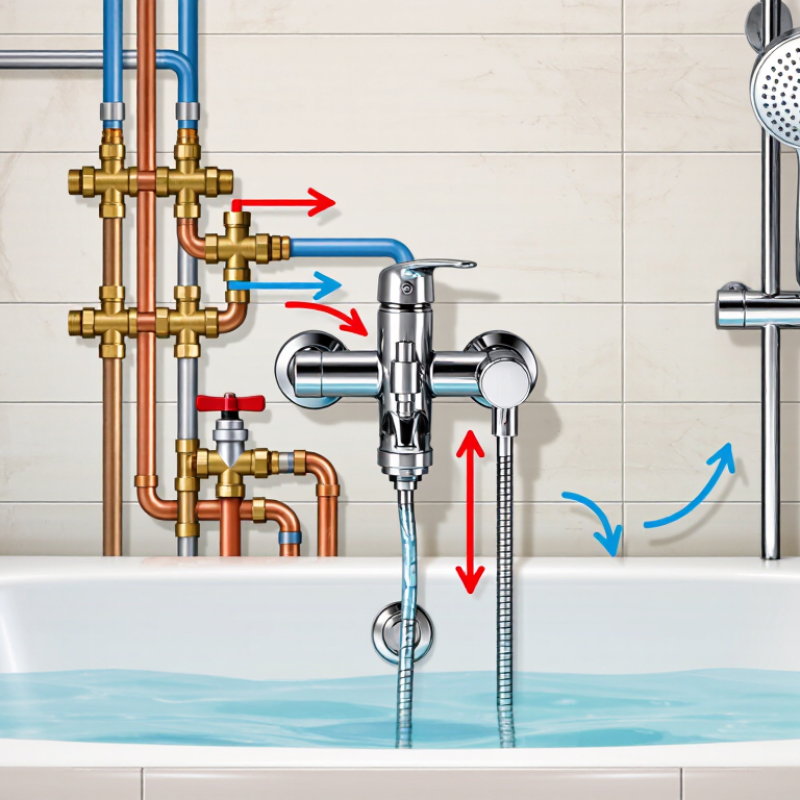
A bathtub faucet moves water through a simple chain of controlled passages. Cold and hot water travel separately through household supply pipes. Each line carries pressure from the plumbing system, often between 40 and 80 psi in residential installations. The handle opens a cartridge or valve, blending both supplies to the selected temperature. Water then enters the shared outlet passage. A diverter may redirect it toward the tub spout or shower line. Pulling the diverter changes the pressure balance, not the water source. The spout finally releases a smooth stream into the tub.
Inside the outlet, seals prevent water from escaping around moving parts. A screen or flow insert can reduce splashing and trap small particles. The EPA WaterSense Residential Kitchen and Bathroom Faucets Specification uses 1.5 gallons per minute at 60 psi for qualifying bathroom faucets, although many bathtub fillers follow different flow requirements.
That distinction matters.
Bathtub faucets usually need faster filling than lavatory faucets. The Water Research Foundation’s Residential End Uses of Water study also identifies faucets as a meaningful part of indoor household demand, making valve condition important. A worn cartridge may cause dripping, temperature swings, or weak flow. I once assumed low pressure caused every weak stream. That was incomplete. A clogged screen can create the same symptom. Real systems vary with pipe length, valve design, pressure, and mineral buildup. Checking the aerator, diverter, and cartridge separately gives a more reliable diagnosis.
What Are the Common Types of Bathtub Faucets?
A bathtub faucet controls the flow, temperature, and direction of water. Inside, cartridges or valves balance hot and cold supplies. A diverter may send water to the tub spout or handheld shower. The right type depends on your tub, plumbing access, and daily habits.
Deck-mounted faucets sit on the tub rim or nearby platform. They suit freestanding tubs with a prepared deck and often include separate handles. Wall-mounted faucets attach to the bathroom wall, saving rim space and creating a cleaner appearance. They require accurate pipe positioning behind the wall. Freestanding faucets stand beside a soaking tub and usually include a tall spout with a hand shower. They need stable floor connections. Tub-and-shower faucet sets combine a tub spout, control valve, and shower outlet. Single-handle models adjust temperature quickly, while two-handle models offer more precise control. Roman tub faucets are designed for wide tub rims and commonly use separate hot and cold handles.
Tips: Measure the faucet holes before buying. Check the spout reach, valve compatibility, and water pressure. A spout that is too short may splash against the wall. One detail is easy to miss. Wall repairs can become expensive when rough-in measurements are wrong. Use a level during installation, and inspect every connection for slow leaks after running the water. A professional plumber should verify concealed piping when access is limited.